
Medical Staff and Physiotherapy Role in Total Knee Replacement.
Safa Abdalrhman1, Umsalma Elyas1, Hassan Abdelnour1,2*, Tariq Abdulmagid1, Abdulmajeed Almalty3, Malaz Adam1
1Physiotherapy Department, School of Health Sciences, Ahfad University for Women, Omdurman, Sudan
2Physiotherapy Department, Faculty of Applied Medical Sciences, Jerash University, Jerash, Jordan
3Physical and Occupational Therapy Department, College of Applied Medical Sciences, the Hashemite University, Zarqa, Jordan
* Corresponding Author: Hassan Abdelnour, Physiotherapy Department, School of Health Sciences, Ahfad University for Women, Omdurman, Sudan, Physiotherapy Department, Faculty of Applied Medical Sciences, Jerash University, Jerash, Jordan
Received: 18 December 2025; Accepted: 19 December 2025; Published: 24 December 2025
Article Information
Citation: Safa Abdalrhman, Umsalma Elyas, Hassan Abdelnour, Tariq Abdulmagid,Abdulmajeed Almalty, Malaz Adam. Medical Staff and Physiotherapy Role in Total Knee Replacement. Archives of Physiotherapy andRehabilitation. 8 (2025): 27-32.
View / Download Pdf Share at FacebookAbstract
Introduction
A Total Knee Replacement (TKR) is a surgical operation in which artifcial material is used to replace the damaged knee joint. Total knee arthroplasty is regarded as one of the most economically efficient and reliably successful surgical procedures conducted in the field of orthopedics. Globally, TKR is becoming more common and over 700,000 TKR arthroplasties were carried out in the United States (USA) in the year of 2012 only1. In Sudan, there is a significant rise in the number of TKR surgeries. Patient-reported outcomes are shown to improve dramatically with respect to pain relief, functional restoration, and improved quality of life (QoL). Medical personnel, including physiotherapists, have a close teamwork relationship when it comes to TKR rehabilitation. The purpose of this study is to ascertain medical personnel's perception toward physiotherapy's role in treating TKR.
Methodology
The viewpoint of medical staff regarding the role of physiotherapy in controlling TKRwas ascertained using a crosssectional survey utilizing questionnaires. A total of 60 medical personnel involved in the care of TKR patients at Shurg Alneel Hospital and the Military Hospital in Khartoum, Sudan, which were chosen for this study. The data were analyzed using version 31 of the Statistical Package for the Social Sciences (SPSS). All ethical considerations have been acquired.
Results
There were 33% of the participants perceive strengthening exercises as the role of physiotherapy in TKR. Majority (50%) of participants strongly agree that physiotherapy plays a significant role in the treatment of TKR. There were 67% of participants who strongly agree with the inclusion of physiotherapists in the rehabilitation team for TKR. Majority (83%) of participants experience effective communication with physiotherapists within the rehabilitation team.
Conclusion
Among the few physiotherapists, considerable efforts are being made in the rehabilitation program for TKR with other medical staff.
Keywords
<p style="text-align:justify"><span style="font-size:11pt"><span style="font-family:Calibri,sans-serif"><span style="font-size:10.0pt"><span style="background-color:white"><span style="color:black">Total Knee </span></span></span><span style="font-size:10.0pt"><span style="background-color:white"><span style="color:black">Replacement (TKR); Medical staff; Physiotherapy; Khartoum; Sudan</span></span></span></span></span></p>
Article Details
1.Introduction
Total Knee Replacement (TKR) also called total knee arthroplasty is a highly successful surgical procedure that involves substituting the damaged surfaces of the knee joint with metal and plastic components, typically performed to alleviate severe pain caused by arthritis, thereby restoring function and mobility [1]. The prevalence and incidence of TKR are increasing worldwide, particularly among adults aged 50 years and older [2,3]. As stated by Makram et al. more than one million TKR surgeries are conducted each year in USA [4]. Medical personnel denote the structured assembly of certified healthcare practitioners, including physicians, nurses, and auxiliary staff such as medical technicians, operating within a healthcare institution. They are accountable for patient care, safety, and the operational aspects of the hospital, playing essential roles in diagnosis, treatment, and upholding quality standards, frequently functioning in accordance with hospital regulations. In TKR, medical staff collaborating throughout the preoperative and postoperative stages to guarantee safety, control pain, support recovery, and avert complications such as blood clots, with the surgeon directing the process, physical therapists concentrating on mobility, and nurses offering continuous monitoring and education to ensure effective rehabilitation and restoration of function [5,6]. Physiotherapists, as part of the medical staff team, are specialists in movement who enable patients to engage actively in their recovery by providing hands-on care and guidance. Physiotherapy rehabilitation in TKR stages is important [3]. Physiotherapy rehabilitation before TKR surgery aims to strengthen supporting muscles (quads, glutes, calves), improves knee range of motion (ROM), teaches walking with crutches, and prepares for post-surgery recovery, leading to better outcomes, faster healing, less pain, and increased independence by optimizing physical function before the operation. Physiotherapy rehabilitation after TKR surgery aids in the restoration of strength, flexibility, and normal movement by guiding patients through exercises designed to reduce swelling, manage pain, enhance ROM, strengthen the surrounding muscles, and retrain walking. Sudan is classified as a low-income nation situated in Africa. The country is confronted with numerous challenges that hinder its development and impact on all sectors, including the health sector [7,8]. Physiotherapy profession in Sudan is growing gradually [9]. Historically, the physiotherapy profession faced challenges due to a limited number of trained professionals and a surplus of inadequately trained assistants [10]. However, universities are striving to meet established standards by producing graduates equipped for rehabilitation [11]. Recently, the medical education system in Sudan has concentrated on enhancing rehabilitation care and adopting a multidisciplinary approach [12]. This encompasses the physiotherapy profession as one of the health professions engaged in rehabilitation [13]. Consequently, this study examined the perceptions of medical personnel regarding the role of physiotherapy in the treatment of TKR.
2. Methodology
Cross sectional study design was used in this study to explore the viewpoint of medical staff regarding the role of physiotherapy in controlling TKR. Self-structured questionnaires were used for data collection. The questionnaires were designed according to the study objectives and included questions about socio-demographic characteristics, knowledge, perception, and experience about physiotherapy role in TK. A total of 60 medical personnel involved in the care of TKR patients were involved in the study as study includes physicians, orthopedic surgeons, nurses, physical therapists, and general practitioners. Participants were working at Shurg Alneel Hospital and the Military Hospital in Khartoum, Sudan. Both hospitals are equipped to receive and accommodate emergencies, outpatients, and inpatient cases 24 hours a day. The data were analyzed using version 31 of the Statistical Package for the Social Sciences (SPSS). The collected data were analyzed using descriptive statistics, such as frequencies and percentages, and the results were presented in tables and charts to enhance clarity. All ethical considerations have been obtained. To maintain anonymity and confidentiality, no personal identifiers were gathered, and only the researchers had access to the data.
3. Results
Table 1: Gender indicates that most participants were female, comprising 60% of the total, while males accounted for 40% of the participants.
|
Category |
Frequency |
Percent |
|
Male |
24 |
40% |
|
Female |
36 |
60% |
|
Total |
60 |
100 |
Table 2: Indicates that 33% of the study participants consisted of physicians and nurses, while general practitioners accounted for 18%. Additionally, orthopedic surgeons and physiotherapists represented 8% of the participants in the study Occupation.
|
Category |
Frequency |
Percent |
|
Physician |
20 |
33% |
|
General practitioner |
10 |
18% |
|
Nurse |
20 |
33% |
|
Orthopedic surgeon |
5 |
8% |
|
Physical therapist |
5 |
8% |
|
Total |
60 |
100 |
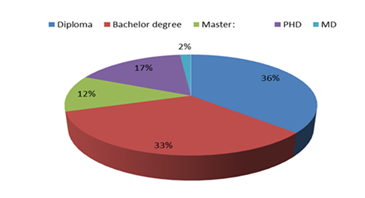
Figure 1: Educational level shows that 36% of the participants obtained a diploma degree, while 33% hold a bachelor’s degree. Additionally, 17% have earned a PhD degree, 12% possess a master’s degree, and merely 2% have an MD degree.
Table 3: Role of physiotherapy in TKR indicates that 33% of the participants in the study perceive strengthening exercises as the role of physiotherapy in TKR, whereas education, lower limb functional exercises, and balance and proprioception training are regarded as the role of physiotherapy in TKR by 17% of the participants each.
|
Category |
Frequency |
Percent |
|
Strengthening exercise |
20 |
33% |
|
Education |
10 |
17% |
|
Perform daily tasks |
7 |
12% |
|
Lower limb functional exercises |
10 |
17% |
|
Balance and proprioception training |
10 |
17% |
|
I don’t know |
3 |
4% |
|
Total |
60 |
100 |
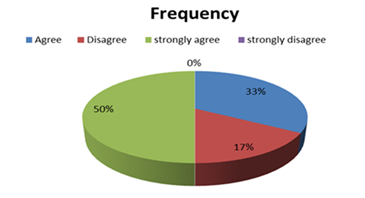
Figure 2: Physiotherapy has important role in treatment of TKR illustrates that a majority (50%) of participants strongly agree that physiotherapy plays a significant role in the treatment of TKR, whereas 17% express disagreement.
Table 4: Complications of TKR if there is no physiotherapy role. As demonstrated in 4, 53% of the participants indicated that atrophy is a complication when physiotherapy does not play a role in TKR, followed by infection at 17%, Deep Vein Thrombosis (DVT) at 12%, a slow healing process at 8%, increased strain at 3%, and reduced ROM at 2%. Additionally, 4% of participants are uncertain about the complications that may arise if physiotherapy is not involved in TKR.
|
Category |
Frequency |
Percent |
|
Atrophy |
30 |
53% |
|
Increased strain |
3 |
6% |
|
Diminished range of motion |
2 |
4% |
|
Slow healing process |
5 |
8% |
|
Infections |
10 |
17% |
|
DVT |
7 |
12% |
|
I don’t know |
3 |
4% |
|
Total |
60 |
100 |
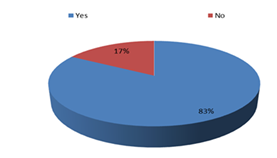
Figure 3: Worked in interdisciplinary team demonstrates that 83% of the participants have engaged in an interdisciplinary team approach, while 17% have not.
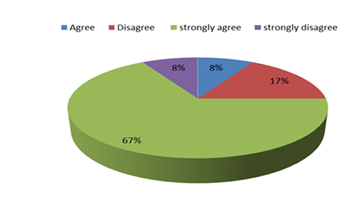
Figure 4: Including physiotherapists in the rehabilitation team of TKR illustrates that 67% of participants strongly agree with the inclusion of physiotherapists in the rehabilitation team for TKR, while 8% agree, 17% disagree, and 8% strongly disagree regarding the inclusion of physiotherapists in the rehabilitation team for TKR.
Table 5: Clear communication with physiotherapists indicates that 83% of participants experience effective communication with physiotherapists within the rehabilitation team, whereas 17% encounter difficulties in their communication with physiotherapists in the rehabilitation team.
|
Category |
Frequency |
Percent |
|
Yes |
50 |
83% |
|
No |
10 |
17% |
|
Total |
60 |
100 |
4. Discussion
More females participated in the study which the same as the study done by Adam et al, which conducted on the medical staff in Sudan as in this study [14]. Different literature showed that the level of education on the medical professions of females is higher in Sudan. For example, the study of Osman et al, agrees on the fact that female’s prevalence is higher in the medical profession which related to the high female enrollment at the entry level education [16]. Same study compared the situation in South Sudan which the entry level for females is lesser than males [15]. This study indicated that a significant number of the participants are healthcare professionals, specifically doctors and nurses. The investigation conducted by Homeida et al. highlighted the historical development of medical education in Sudan, revealing that Sudan established one of the earliest medical colleges in Africa in 1924 [16]. On the other hand, there are few physiotherapists involved in this study. As mentioned earlier in this study, physiotherapy is new growing health profession in Sudan [10]. Among the limited number of physiotherapists, they are making significant efforts in the rehabilitation program within the Sudanese community. The study conducted by Abdelnour et al. determined that physiotherapists invest significant effort in the treatment and education of patients, which involved patients in demonstrating treatment at home and enhanced their awareness of the benefits and impact of physiotherapy [17]. Concerning the accessibility of physiotherapy services, patient access is significantly restricted owing to the insufficient number of physiotherapists available in Sudan. The study carried out by Ahmed et al. indicated that Sudanese women experiencing Urinary Incontinence (UI) face challenges in seeking consultation from physiotherapists [18]. Most health professionals involved in this study possess an undergraduate degree, with only a small number holding a postgraduate degree. Despite the numerous challenges faced by health professionals in Sudan during their postgraduate studies, it is still advisable for them to pursue a postgraduate degree. This pursuit is essential for acquiring specialized knowledge, advancing their careers into leadership positions, and enhancing patient care through the development of advanced skills [19]. The study conducted by Abdellatif et al. examined the impact of the armed conflict in Sudan on university professors, research scientists, and students. The findings indicated that academics are subjected to significant salary reductions, job losses, and property damage. Both academics and students endure displacement and psychological distress [20]. Most participants in this study express strong agreement that physMostucial in the treatment of TKR. The research conducted by Alkazaleh et al. in Sudan revealed a significant enhancement in knee ROM for orthopedic patients who participate in physiotherapy sessions as part of their rehabilitation program [3]. Participants in this study express strong agreement regarding the incorporation of physiotherapists into the rehabilitation team for TKR. This supports that the knowledge and skills possessed by physiotherapists facilitate their leadership and educational responsibilities in the care of osteoarthritis, TKR, and hip replacement within this field [21].
Numerous participants in this study expressed that muscles atrophy is a complication that arises when physiotherapy is not involved in TKR rehabilitation plan and agrees on physiotherapy role on muscle strengthen. Muscle weakness and loss are quite prevalent following TKR, particularly affecting the quadriceps muscles. This phenomenon arises from various factors that occur post-surgery, such as joint effusion and nerve inhibition, which hinder proper muscle activation. Consequently, this leads to a considerable reduction in strength that may last for years; however, it can be enhanced through targeted rehabilitation exercises conducted by physiotherapists. The study conducted by Toth et al. (2025) indicates that physiotherapy modalities enhance contractile activity [22]. This, in turn, facilitates functional recovery from TKA by maintaining skeletal muscle size and contractility, as well as reducing muscle denervation associated with surgery [22]. In addition, the function of physiotherapy goes to muscle strengthening as agreed by participants to encompasses tailored, progressive exercises aimed at restoring muscle strength, rectifying imbalances, enhancing movement, and preventing future injuries. In 2020, a study entitled "Evaluating the feasibility of the expansion of community-based rehabilitation into the physiotherapy curriculum in Ahfad University for Women, Sudan" demonstrated an increased reliance on the multidisciplinary rehabilitation approach, attributed to difficulties in medical resources, training, and staff availability [23]. In this study, it appears that an interdisciplinary team approach is a prevalent method in TKA rehabilitation, as most medical personnel are accustomed to collaborating within an interdisciplinary team framework. Consequently, this suggests a positive development in the rehabilitation strategies employed in Sudan over the past five years. Furthermore, participants in this study engaged in effective communication with physiotherapists as part of the interdisciplinary rehabilitation team, which resulted in the development of clear protocols aligned with patient goals, fostering trust, minimizing errors, and guaranteeing consistent patient centered care.
5. Conclusion
The interdisciplinary rehabilitation team approach led to the establishment of well-defined protocols that are in harmony with patient objectives, thereby promoting trust, reducing errors, and ensuring reliable patient-centered care. In this study, among the few physiotherapists, considerable efforts are being made in the rehabilitation program for TKR with other medical staff.
Recommendations
Further investigations into patient centered care in Sudan may contribute to the development, implementation, and assessment of interdisciplinary rehabilitation approaches within the country. A limitation of this study was the small sample size (N=60), which affects the generalizability of the findings to the wider populations of Sudan. Future research should focus on utilizing a larger sample.
Author's contribution
All authors participated in every phase of this study, including data collection, data analysis, and manuscript writing, editing, and reviewing.
Acknowledgment
The authors express their gratitude to all participants who took part in this study.
Funding:
The study did not receive any funding.
Conflict of interest:
The authors affirm that there are no conflicts of interest.
References
- Inacio M C S, Paxton E W, Graves S E, et al. Projected increase in total knee arthroplasty in the United States–an alternative projection model. Osteoarthritis and cartilage 25 (2017): 1797-1803.
- Rizaldy, M. K. The Triad of Risk: Advanced Age, Female Gender, and High BMI in Patients Requiring Total Knee Replacement for Osteoarthritis at a Tertiary Indonesian Hospital. Bioscientia Medicina: Journal of Biomedicine and Translational Research 9 (2015): 8202-8219.
- Alkazaleh H, Adam Y, Abdelnour, H, et al. Capsular stretching as physiotherapy technique for Sudanese patients with knee osteoarthritis in Al-Neelain University Physiotherapy Outpatient Clinic. Fizjoterapia Polska 24 (2024): 195-200.
- Makram A M, Makram O M, Youssef M, et al. A Comparison of the logistics between the conventional instruments and patient-specific templating in total knee replacement in the low-income setting. Health Policy and Technology, 10 (2021): 100581.
- Abdallha B, Aladwan R, Abdelnour H. Knowledge of Physiotherapy among Final Year Students Faculty of Medicine in Universities at Khartoum State, Sudan. International Journal of Innovative Research & Development, 12 (2023): 125-130.
- Abdelnour H, Khalil A, Alkazaaleh H, et al. Physiotherapy and intensive care unit in Sudan. Fizjoterapia Polska 25 (2025): 357-362
- Abdelnour H, Mohamed A, El Tigani D, et al. Physical Disabilities and Rehabilitation Services in Khartoum State, Sudan. The International Journal of Humanities & Social Studies 11 (2023): 79-83.
- Ahmed M, Adnan H, Oduoye M et al. Beyond the battlefield: strategies for revitalizing Sudan’s healthcare system amidst war. Annals of Medicine and Surgery 87 (2025): 1804-1807.
- Alkhazaaleh S, Abdelnour H, Bleedy N, et al. Physiotherapists and Communication Skills. Vascular and Endovascular Review 8 (2025): 299-304.
- Abdalmagid T, Abdelnour H, Aladwan R. Physiotherapy Students and Clinical Education in Sudan. International Journal of Novel Research in Healthcare and Nursing 10 (2023): 197-201.
- Almalty A, Abdelnour H, Bleedy N, et al. Physiotherapists’ Perceptions of Professional Ethics and Law. African Journal of Biomedical Research 27 (2024): 7903-7909.
- Abdelnour H, Bolis M. Clinical Placement and Clinical Skills at Ahfad University for Women’s Physiotherapy Education. International Journal of Current Research 15 (2023): 26650-26653.
- Eltigani Y, Saied L, Abdelnour H, et al. Physiotherapy and Community Based Education. J Adv Sport Phys Edu 8 (2025), 191-196.
- Adam M, Mohmmden D, Abdelnour H, et al. Knowledge and Attitude of Physiotherapists Towards Communication Skills in Physical Therapy Sessions in Khartoum State of Sudan: A Cross-Sectional Study. The Healer Journal of Physiotherapy and Rehabilitation Sciences 5 (2025): 47-54.
- Osman R, Abdelnour H, Elaalem, A. Physiotherapy use of Paraffin Wax for Rheumatoid Arthritis in Sudan. International Journal of All Research Education & Scientific Methods 12 (2024): 2554-2560.
- Homeida M, Homeida S, Abubaker A, et al. Maintaining Vital Medical Education Programs Despite the Devastating Effects of the Sudanese War. The American Journal of Tropical Medicine and Hygiene 113 (2025): 246.
- Abdelnour H, Bleedy N, Alkazaleh H, et al. Amputation Patient and Physiotherapy Education in Sudan. Cuestiones de Fisioterapia 54 (2025): 706-717.
- Ahmed I, Mergany E, Alfadil S, et al. Awareness and Experience of Physiotherapy Role in Urinary Incontinence. Saudi Journal of Nursing and Health Care 8 (2025): 301-307.
- Ahmed M H, Husain N E, Ahmed M, et al. Clinician-scientist (MD-PhD) postgraduate programs in Sudan: challenges, strategies, implementations and future directions? Journal of Public Health and Emergency 6 (2022).
- Abdellatif S M, Elmubarak S A, Suliman H A, et al. A nation in crisis: effects of Sudan’s armed conflict on university professors, research scientists, and students. Medicine, Conflict and Survival (2025): 1-21.
- Briggs A M, Hinman R S, Darlow B, et al. Confidence and attitudes toward osteoarthritis care among the current and emerging health workforce: a multinational interprofessional study. ACR open rheumatology 1 (2019): 219-235.
- Toth M J, Savage P D, Snoke D B, et al. Sustaining neuromuscular activation after total knee arthroplasty preserves skeletal muscle fiber size, contractility, and innervation in older adults. Experimental gerontology (2025): 112831.
- Abdelnour H. Evaluating the feasibility of the expansion of community-based rehabilitation into the physiotherapy curriculum in Ahfad University for women Sudan (2020).
 Impact Factor: * 1.3
 Acceptance Rate: 73.39%
  Time to first decision: 10.4 days
  Time from article received to acceptance: 2-3 weeks