
Prevalence of Rumen and Reticulum Foreign Body in Cattle Slaughtered at Jimma Municipal Abattoir, South West Ethiopia
Abraham Adugna Tilahun1 ,Gelan Dule Dahesa2*
1 School of Veterinary Medicine, Wolaita Sodo University, Wolaita Sodo, Ethiopia
2 Department of Animal health, Oromia Job Creation and Vocational Bureau Gedo TVET college, South weast shoa zone, Ambo, Ethiopia
*Corresponding Author Gelan Dule Dahesa, Department of Animal health, Oromia Job Creation and Vocational Bureau Gedo TVET college, South weast shoa zone, Ambo, Ethiopia
Received: 24 October 2025; Accepted: 27 November 2025; Published: XX December 2025
Article Information
Citation:
Abraham Adugna Tilahun, Gelan Dule Dahesa. Prevalence Of Rumen and Reticulum Foreign Body in Cattle Slaughtered at Jimma Municipal Abattoir, South West Ethiopia. Archives of Veterinary Science and Medicine. 8 (2025): 64-71.
View / Download Pdf Share at FacebookAbstract
Foreign body ingestion is a non-infectious illness of the fore stomach in animals that has been shown to block the digestive activities of the gastrointestinal tract. A cross-sectional study was conducted from November 2024 to April 2024 at Jimma municipal Abattoir, Oromia Regional State, Southwest Ethiopia, with the objectives to assess the prevalence of rumen and reticulum foreign bodies, identify types of foreign bodies and associated risk factors. The study animals were selected by using simple random sampling. Both ante mortem and postmortem examinations were employed to examine the live animal and for the recovery of foreign bodies from rumen and reticulum after slaughter, respectively. The chi-square test (χ2 -test) was applied to test if there is any statistically significant association with risk factors. From the total of 300 examined cattle, 79 (26.33%) (95% CI: 21.6 - 31.6) were found positive for the occurrence of indigestible foreign bodies. When the prevalence was compared between among different age groups, different body condition score and origin higher prevalence of foreign bodies 26.94%, 34.38%, 37.94%, 57.14%, were observed in female, age older than 10 years, animal having poor body condition score and unknown area respectively. There is higher significance in different body condition scores and animals originated from different areas with p<0.05. The types of foreign bodies detected were plastics, ropes clothes, wires and both plastic and ropes. From these plastics 39 (49.37%), rope 23 (29.11%), cloth 11(13.92%), wire 4 (5.06%) and both plastic and ropes 2 (2.53) were more frequently encountered of the positive cases, respectively. From the rumen, reticulum and both rumen and reticulum the indigestible foreign bodies were majorly found in rumen 20.3% followed by reticulum 5.33% and less in both rumen and reticulum 0.67% with a statistical difference (p < 0.05). It concluded that appropriate solid waste disposal system and it is important to raise awareness to the community about adequate feed supply to the livestock needs to be implemented in the study area to prevent health risk of cattle.
Keywords
<p>Foreign body; Jimma, Municipal abattoir; Prevalence; Reticulum; Rumen</p>
Article Details
1. Introduction:
Ethiopia is believed to have the largest livestock population in Africa. About 50.8 million cattle, 25.9 million sheep and 21.9 million goats’ population are estimated to be in the country [1]. The country has great livestock production potential, both for local consumption and export purposes, but is under exploited due to limited natural and commercial feeds, various diseases, limited exploitation of genetic potential and inaccessible livestock marketing and processing [2]. Environmental contamination with solid wastes from domestic and commercial sources is common in developing countries like Ethiopia because of handling of waste is improper in developing countries due to low environmental standards, poor waste recovery and disposal systems, low economic status, poor hygienic and living standards, less awareness of public regarding harmful effect of plastics, no stringent/strict law regarding waste disposal, and many other factors. The solid wastes may range from metallic to nonmetallic type and, of recent, plastic bags are common in various per urban and urban areas of developing countries [3,4]. Livestock, especially ruminants, have been known to ingest indigestible matter (plastics, nails, rubber, wire, wood, ropes), especially during periods of drought. An established reason why animals consume indigestible material is forage scarcity [5]. Anther factors which cause ingestion of indigestible foreign bodies by animals are mainly associated with environmental pollution and poor feeding management [6].
The bovine species does not have highly sensitive prehensile organs, such as lips and tongue, nor are a discriminating sense of taste and ingestion and lodgment of foreign bodies common due to indiscriminate feeding habits. Sheep and goats are highly selective feeders and ingest significantly less number of foreign bodies as compared to cattle [1]. The ingestion of foreign bodies is primarily noticed in stray animals residing in urban areas of developing countries [7,8]. Foreign body ingestion is a non-infectious illness of the fore stomach in animals that has been shown to block the digestive activities of the gastrointestinal tract. The presence of these foreign materials in the rumen and reticulum also hampers the absorption of volatile fatty acids and consequently reduces the rate of animals fattening [9]. One of the diseases is due to ingestion of in digestible foreign bodies, which poses serious economic loss in terms of decreased production, productivity and a high death rate, especially in developing countries [6]. Depending on the amount and duration of nonmetallic foreign bodies in the reticulo-rumen cause recurrent rumen tympani, inapeatance, impaction, chemical leaching, indigestion, immunosuppression, decreased production and progressive loss of body condition conditions encountered in animals with ruminal impaction due to plastic materials [10]. Ingested plastic materials in the rumen slowly release the chemicals in rumen fluid, which intern enter the food chain through milk and meat products. These chemicals have a detrimental effect on human health [4].
Ingestion of foreign bodies in the reticulum swallowed metallic objects such as nail or pieces of wire fall directly on the reticulum or pass into the rumen and subsequently carried over the rumeno-reticular folds into the cranio ventral part of the reticulum [11]. Some penetrate the wall of reticulum and diaphragm manifest the symptoms of Traumatic reticulitis [12]. The impact of indigestible foreign objects (IFOs) on livestock health is devastating to the extent that surgical procedures and early-detection equipment are being widely needed by farmers, nowadays. However, such equipment is expensive, and out of reach for farmers in a developing country. It is most of the time asymptomatic and only clinically diagnosed with live animals if the material is accumulated in large amounts albeit adequately studied in abattoirs [5,2]. In the study area, however, information regarding the magnitude and occurrence of fore stomach indigestible foreign bodies is very much limited. The fact that forestomach impaction by these foreign bodies is mainly asymptomatic in nature and only diagnosed in live animals if the material is accumulated in large amounts and thus, it can be adequately studied in abattoirs.
Therefore, the objectives of this study were:
- To determine the prevalence of indigestible foreign bodies in the rumen and reticulum of animals slaughtered at jimma municipal Abattoir, and its associated potential risk factors.
- To identify the location and type of these indigestible foreign bodies in cattle slaughtered.
2. Material And Methods
2.1. Study Area
The study was conducted at Jimma Municipal Abattoir in Jimma Town. Jimma Town is located in Southwest of Ethiopia, 353 km away from the capital city, Addis Ababa. Jimma Town is surrounded by rural districts that mainly rearing cattle, sheep, goat and poultry. The town is geographically located at 7°41′N latitude, 36°50′E longitude, the average altitude of 1,780 meters above sea level, and commonly characterized as temperate weather with mean annual maximum and minimum temperature of 30°C and 14°C, respectively. The annual rainfall ranges between 1138mm and 1690mm [13].
2.2. Study Population
The study was conducted on 300 cattle of local breeds with apparently healthy animals coming to the Jimma municipal abattoir for slaughtering purposes. The study was conducted on animals’ cattle kept under different management systems. The animals were originated from different districts of the Jimma zone, mainly from Agaro, Dedo, Bilida, Serbo, Seka, Kefa, Jimma, Asendabo, and unknown area. Studied animals were in different age groups, body conditions, origin and both sexes were recorded.
2.3. Study Design
In order to determine the prevalence and types of indigestible foreign bodies swallowed by cattle in the research region, a cross-sectional study was done, with risk factors such as sex, age, physical body condition, and origin taken into account.
2.4. Sampling Technique and Sample Size Determination
Initially Jimma municipal abattoir was purposively selected because of indigestible foreign bodies can only found highly in healthy animals during postmortem inspection and information regarding the magnitude and occurrence of fore stomach indigestible foreign bodies is very much limited in study area. Then, a simple random sampling technique was used to select the animals from lairage. The sample size was determined according to Thrusfield (2018) formula with an expected prevalence of 12.23% from the previous studies [14] and 95% statistical confidence level and 5% precision.
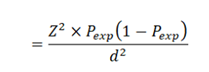
Where: N = required sample size; Pexp = expected prevalence (P=12.23%) d = desired absolute precision. Z = 1.96 for 95% confidence interval. N = 1.962x0.1223 (1-0.1223)/0.052 = 3.84× 0.8777/0.0025 =165 the sample size was increased to 300 to increase precision.
Thus, a total of 384 cattle were selected using a simple random sampling method randomly.
2.5. Study Methodology
2.5.1. Ante mortem examination
Ante mortem examination on individual animals was done for assessment of age, sex, origin, and body condition. During the study time the selected animals were categorized into three based on age ≤5 year (young), 5- 10year (adult) and ≥10-year (old) group [15]. Body condition also poor, medium and good based on body condition of cattle was recorded as poor, medium and good based on the appearance of the animal and manual palpation of the spines proses and transverse processes of the lumbar vertebrae described by [16]. Each animal selected for the study was further identified by providing a unique identification number that could be used for both ante mortem and postmortem examinations of the animal and each animal marked for the identification by writing a code on its gluteal muscle by using marker.
2.5.2. Postmortem examination
After slaughter, the stomach was carefully removed from the abdomen and the stomach opened and explored for the presence of any indigestible foreign body in rumen and reticulum by visual inspection and palpation. For the existence of foreign substances, all of the contents are extensively inspected and explored. Then the indigestible foreign body was removed, washed, dried, and identified. Later, the location and types of foreign bodies that found in the rumen and reticulum were properly recorded.
2.5.3. Data Management and Analysis
All raw data generated during ant mortem and postmortem examination was stored using computer-based data management system employing Microsoft excel and the analysis was conducted using STATA software 2014 version after data was coded. Descriptive statistical analysis was used to summarize and present the data collected. Prevalence of indigestible foreign bodies was expressed as percentage by dividing total number of animals positive for indigestible foreign bodies to the total number of animals examined. The chi-square test (χ2 -test) was applied to test if there is any statistically significant association with risk factors such as sex, body condition, origin and age and a difference was recorded as statistically significant in p-values were less than 0.05.
3. Results
3.1. Prevalence of foreign bodies
From the total of 300 cattle (271 male and 29 female) examined for the presences of any foreign bodies in their rumen and reticulum, 26.33% (95% CI: 21.6 - 31.6) of them were found positive (Table 1).
Table 1: Prevalence of foreign bodies
|
NO |
No of examined |
No of positive |
Prevalence |
95% CI |
|
1 |
300 |
79 |
26.33% |
21.6 - 31.6 |
3.2.Prevalence of foreign body types
The types of foreign bodies were wires, plastics, clothes and ropes. Plastics is the most common as observed in 39(49.37%) of the positive cases with high significant difference statically in types of foreign body (Table 2).
Table 2: Prevalence of foreign body types
|
Foreign body |
No positive |
Prevalence |
P value |
|
Plastic |
39(49.37%) |
13 |
0.000 |
|
Cloth |
11(13.92%) |
3.67 |
|
|
Rope |
23(29.11%) |
7.67 |
|
|
Plastic and rope |
2(2.53%) |
0.67 |
|
|
Wire |
4(5.06%) |
1.32 |
|
|
Total |
79(26.33%) |
26.33 |
3.3. Prevalence of Foreign Bodies with Regard to Lodgment Site:
From 69 positive cases of foreign bodies, 20.3% were occurred in rumen while 5.33% in reticulum and 0.67% in both rumen and reticulum. Prevalence of foreign bodies to these sites was highly statistically significant (Table 3).
Table 3: Prevalence of foreign bodies with regard to lodgment site
|
Location |
No of positive |
Prevalence (%) |
P- value |
|
Rumen |
61(77.22%) |
20.3 |
0.000 |
|
Reticulum |
16(20.25%) |
5.33 |
|
|
Both |
2(2.53) |
0.67 |
|
|
Total |
79 |
26.33 |
3.4. Prevalence of Foreign Bodies with Regard to Sex:
From the total number of animals 90.33% male and 9.67%female were examined. Of the 26.33% total prevalence of foreign bodies in cattle, 26.94% and 20.69% were detected in male and female animals, respectively (table 3). The statically analysis also showed that there exist non significant differences among the sex groups in the occurrences of foreign bodies (Table 4).
Table 4: Prevalence of Foreign Bodies with Regard to Sex:
|
Sex |
|||
|
Foreign body observed |
Male |
Female |
P- value |
|
Plastic |
36(13.28 %) |
3(10.34) |
|
|
Cloth |
10(3.69 %) |
1(3.45%) |
|
|
Rope |
21(7.75%) |
2(6.90 %) |
0.468 |
|
Plastic and rope |
2(0.74%) |
0(0.0%) |
|
|
Wire |
4(1.48%) |
0(0.0%) |
|
|
Total |
73(26.94%) |
6(20.69 %) |
|
|
No of examined animals |
271(90.33%) |
29(9.67%) |
|
3.5. Prevalence of Foreign Bodies with Regard to Age:
Study animals were grouped into three as young (< 5 years), adult (5-10 years) and old (> 10 years). From 19.67%, 59% and 21% of animals were examined with those age groups, 28.81%, 22.60% and 34.38% were found positive, respectively. Foreign bodies were more frequently encountered in old animals than other two groups. The statically analysis also showed that there exist not significant differences among the three age groups in the occurrences of foreign bodies (Table 5).
Table 5: Prevalence of foreign bodies with regard to age:
|
Age |
||||
|
Foreign body observed |
Young |
Adult |
Old |
P- value |
|
Plastic |
13(22.03%) |
20(11.30 %) |
6(9.38%) |
|
|
Cloth |
0(0.0%0 |
9(5.08 %) |
2(3.13%) |
|
|
Rope |
2(3.39 %) |
9(5.08%) |
12(18.75%) |
0.166 |
|
Plastic and rope |
0(0.0%) |
0(0.0%) |
2(3.13%) |
|
|
Wire |
2(3.39%) |
2(1.13%) |
0(0.0%) |
|
|
Total |
17(28.81%) |
40(22.60 %) |
22(34.38 %) |
|
|
No of examined animals |
59(19.67%) |
177(59%) |
64(21.33 %) |
|
3.6. Prevalence of Foreign Bodies with Regard to Body Condition Score:
Most of the animals brought to Jimma Municipal Abattoir to be slaughtered were comprised of good, medium and poor. From 82(27.33%), 96(32%) and 122(40.67%) animals examined with poor, medium and good body conditions, 30(37.97%), 28(35.44%) and 21(26.58%) were positive for foreign bodies, respectively of their group. There was a highly statistically significant difference (table 6).
Table 6: Prevalence of foreign bodies with regard to body condition score:
|
Body condition |
||||
|
Foreign body observed |
Poor |
Medium |
Good |
P- value |
|
Plastic |
18(21.95%) |
14(14.58%) |
7(5.74 %) |
|
|
Cloth |
3(3.66%) |
3(3.13%) |
5(4.10 %) |
|
|
Rope |
9(10.98 %) |
8(8.33%) |
6(4.92%) |
0.007 |
|
Plastic and rope |
0(0.0%) |
2(2.08 %) |
0(0.0%) |
|
|
Wire |
0(0.0%) |
1(1.04%) |
3(2.46%) |
|
|
Total |
30(37.97%) |
28(35.44%) |
21(26.58) |
|
|
No of examined animals |
82(27.33) |
96(32%) |
122(40.67%) |
|
3.7. Prevalence of foreign bodies with regard to origin
The cattle that came from different districts of the region including Seka, Dedo, Bilida, Serbo, Jimma, Agaro, Asendabo, Kefa and other from unknown and slaughtered at jimma Abattoir were also assessed for it. Accordingly, the highest frequency of indigestible foreign bodies was observed in animals coming from unknown area 57.14 %, followed by jimma 50%, Asendabo 29.27%, Agaro 25%, Serbo 23.53%, Dedo 23.08%, Kefa 23.81%, Bilida 22.81% while the lowest was recorded in cattle that came from Seka 12.12% in equal frequency with statistically significant differences (Table 7).
Table 7: Prevalence of foreign bodies with regard to origin
|
Origin |
Foreign body observed |
No of examined |
Total positive |
||||
|
Plastic |
Rope |
Cloth |
Rope and plastic |
Wire |
|||
|
Agaro |
5(13.89%) |
2(5.56%) |
2(5.56%) |
0(0.0%) |
0(0.0%) |
36(12%) |
9(25.00%) |
|
Dedo |
5(19.23%) |
0(0.0%) |
0(0.0%) |
1(3.85%) |
0(0.0%) |
26(8.67%) |
6(23.08%) |
|
Bilida |
6(10.53%) |
3(5.26%) |
3(5.26%) |
1(1.75%) |
1(1.75%) |
57(19%) |
13(22.81%) |
|
Serbo |
4(7.84%) |
5(9.80%) |
1(1.96%) |
0(0.0%) |
2(3.92%) |
51(17%) |
12(23.53%) |
|
Seka |
1(3.03 %) |
2(6.06%) |
1(3.03%) |
0(0.0%) |
0(0.0%) |
33(11%) |
4(12.12%) |
|
Kefa |
1(4.76 %) |
2(9.52%) |
1(4.76%) |
0(0.0%) |
1(4.76%) |
21(7%) |
5(23.81%) |
|
Jimma |
8(28.57%) |
4(14.3%) |
2(7.14%) |
0(0.0%) |
0(0.0%) |
28(9.33%) |
14(50.00%) |
|
Asendabo |
5(12.20%) |
6(14.6%) |
1(2.44%) |
0(0.0%) |
0(0.0%) |
41(13.7%) |
12(29.27%) |
|
Unknown |
4(57.14%) |
0(0.0%) |
0(0.0%) |
0(0.0%) |
0(0.0%) |
7(2.33) |
4(57.14 %) |
4. Discussion
The purpose of this study was to assess the occurrences of IFB (indigestible foreign body) in cattle slaughtered at Jimma Municipal abattoir. It was found that 26.33% (95% CI: 21.6-31.6) of the slaughtered cattle had IFB in the rumen and reticulum. The occurrence rate of IFB in cattle obtained during this study is higher than the previously reported studies in jimma [14]. prevalence of ruminal and reticular foreign bodies in cattle slaughtered at Jimma Municipal Abattoir, Hawasa [17]. Occurrence of indigestible foreign bodies in forestomachs and adjacent structures of cattle slaughtered at Hawassa, [11]. Study on Rumen and Reticulum foreign bodies in cattle slauthered at Wolaita Sodo municipal Abattoir, and [18]. Study on Indigestible Foreign Body in Rumen and Reticulum of Cattle Slaughtered at Bahir Dar Municipal Abattoir which was 12.23%, 17.1%, 17.16% and 20.3%, respectively. Prevalence was agreed with study reported at Bishoftu [2]. Prevalence of indigestible foreign bodies and its associated potential risk factors in rumen and reticulum of cattle at Bishoftu Elfora Export Abattoir with 30.73%. But less study reported by Ibsa and Tewodros on postmortem study on indigestible foreign bodies in rumen and reticulum of cattle (case: haramaya and awaday municipal abattoirs in domestic ruminants with 41.7% [19].
These differences in the prevalence of foreign bodies between various areas might be due to differences in animal management systems and the extent of foreign body management and may increase use of foreign bodies with improper disposal both in the rural and/or urban areas and in the grazing areas [20]. Additionally, this may be due to seasonal variation in which the studies were conducted. The occurrence of IFB has been reported to be high in dry season where there is scarcity of forage, which makes the animal eat anything in its immediate surroundings that may include IFB [21]. In this study, it was also found that animals with poor body condition were more likely to have IFB than those with medium and good body condition. This result was agreed with the report of Fromsa and Mohammed; Tesfaye and; and Vanitha et al [13,22,23]. This may be due to once ingested, the IFB in the gastrointestinal tract may interfere with the flow of ingesta and absorption of volatile fatty acids (VFA) and hence reduce weight gain [24]. Moreover, IFB may cause anorexia, pain, and fever and hence decrease production and loss of body condition. However, other factors may have contributed to the poor body condition of the animals such as inadequate feeding. The finding of this study revealed frequency of detection of indigestible rumen and recticulum foreign bodies in both sexes is similar and there was not statistically significant difference. This result does agree with work of [1]. Indigestible rumen foreign bodies-causes of rumen impaction in cattle slaughtered at Addis Ababa abattoir enterprise, but it disagrees with some results previous reported in Ethiopia. This may be due to the management system under which the female animal kept was some better than the male, because the female has physiologically higher susceptible to IFB than male as different research reported [17,11,3]. The result of this study and other countries like Nigeria and Jordan indicated that plastic bags are the most common causes of rumen impaction. From this study, the types of foreign bodies detected in this study were plastic, rope, cloth, and wire. The result of this study indicated that plastics 49.37% were the most common observed foreign body. This finding is in agreement with previous studies in Ethiopia [25,1,26]. This study indicated that most foreign bodies occurred 20.33 % in the rumen was higher than in reticulum 5.33% and rumen and reticulum 0.67% from the total 26.33% positive cases. This result agreed with Desiye and Mersha [15] who reported that from 64 positive cases of foreign bodies, 79.68% was detected from rumen and Jagos [27] reported higher overall prevalence of foreign bodies in adult cows (51%) where 63% and 15% of the foreign bodies was observed in rumen and reticulum, respectively. The higher frequency of foreign bodies was detected at rumen than reticulum. This may be due to the fact that many ingested feeds go to the rumen and IFB with high density were most frequently recovered from reticulum. The occurrence of IFB in the rumen is probably due to its larger volume compared to other compartments, and almost all ingested feed especially of low density settles in the rumen [27,21].
The frequency of occurrence of rumen and reticulum foreign bodies were detected in old animal’s (≥10 years) (34.38%) followed by young (≤5 years) (28.81%) and adult (5-10 years) (22.6%) age group of animals. Highest prevalence (34.38%) of foreign bodies was detected in cattle greater than 10 years than other age group. This finding is in agreement with Desiye and Mersha [15] who recover (81.25%) of foreign bodies in cattle greater than 10-year age. Besides Fromsa and Mohammed; Hailat etal.; Tesfaye and Chanie; [22,20,21] and Rahel (2011) also reported (17.85%) of the animals had higher frequency of foreign bodies in rumen and reticulum at the old age. This might be associated with increase in exposure through life, and many were found to accumulate and lead the undead animals to be positive. The highest prevalence of foreign bodies was observed in animals originating from Unknown (57.14%) distinct area and the lowest prevalence in those originating from Seka (12.12%). This study is agreed with study of Desiye Tesfaye and Mersha Chanie, [15,21] study on Rumen and Reticulum Foreign Bodies in Cattle Slaughtered at Jimma Municipal Abattoir and reported lowest prevalence in those originated from Seka (5.46%). This difference may be due to unlike management in different areas and may between urban and rural area. Cattle from rural areas are more likely to be fed on pasture, that are ingested invariably lodge in the floor of the where occurrence of disease conditions due to ingested reticulum due to their relative mass and the position of the FBs is very rare, than cattle from urban areas [17].
5. Conclusions And Recommendation
Foreign bodies may be a significant cause of not only losses in livestock production, it also causes mortality and morbidity. Plastic material can also release the chemicals in rumen fluid, which intern enter the food chain through milk and meat products. These chemicals have a detrimental effect on human health. The overall prevalence of foreign bodies was 79(36.33%). Similarly, Plastic was found the most common foreign bodies found preferably in Rumen (13%) and metallic foreign body (wire) and burned plastic in reticulum. Both poor body condition and old age cattle are the most affected groups compared to that of medium and good body condition and young and adult age group of cattle respectively [28]. It is concluded that ingestion of IFB is common in cattle slaughtered at Jimma municipal abattoir and its occurrence was higher than the previous result recorded [29]. This may indicate the extensive management system can be incriminated as a major predisposing factor for acquiring indigestible rumen foreign bodies in cattle [30]. It can also show shortage of forage during dry season and nutritional deficiency also leads animals to find their own feed from grazing lands, which is potentially contaminated with various types of indigestible foreign bodies [31].
Based on the above conclusion the following recommendations are forwarded:
- Awareness creation for animal owners should be done toward the effect of foreign bodies in the health, production and productivity of animals by veterinarian and other government sectors.
- Owner should prevent animal nutritional deficiencies and not allowing animals in polluted grazing land.
- Appropriate solid waste disposal system should be implemented by society.
- The general population should be award to reduce environmental pollution with any foreign body.
List Of Abbreviation
IFB, Indigestible foreign bod: Χ², Pearson chi-square: IFO, Indigestible foreign objects.
Declaration
Ethics approval and Consent to participate
Not applicable
Consent for publication
Not applicable
Availability of data and materials
All the datasets generated or analyzed during this study are included in this manuscript.
Competing interests
All authors have nothing to disclose in this work.
Funding
The current study was not funded by any institution.
Authors' contributions
The author contributed to data collection, study design, data interpretation, reference search, manuscript writing, and editing, and all authors have approved the submission of the final manuscript.
References
- Mekuanint S, Alemneh T, Asredie T. Indigestible rumen foreign bodies-causes of rumen impaction in cattle, sheep and goats slaughtered at Addis Ababa abattoir enterprise, Ethiopia. Journal of Veterinary Science and Medicine 5 (2017): 5
- Duresa L, Kitessa J.D, Feyissa CT. Prevalence of indigestible foreign bodies and its associated potential risk factors in rumen and reticulum of domestic ruminants at Bishoftu Elfora Export Abattoir. Veterinary Medicine and Science 8 (2022): 2623-2630.
- Bwatota S, Makungu M, Nonga H E. (2018): Occurrences of indigestible foreign bodies in cattle slaughtered at Morogoro Municipal Slaughterhouse, Tanzania. Journal of Veterinary Medicine 18 (2018): 18-20.
- Priyanka M, Dey S. Ruminal impaction due to plastic materials-An increasing threat to ruminants and its impact on human health in developing countries. Veterinary world 11 (2018): 1307.
- Nongcula V, Zhou L, Nhundu K, et al. Association between the prevalence of indigestible foreign objects in the gastrointestinal tract of slaughtered cattle and body condition score. Animals 7 (2017): 80.
- Teshome E, Abdela N, Hassan A. Postmortem study on indigestible foreign bodies in rumen and reticulum of ruminants slaughtered at Asella Municipal Abattoir, Southeastern Ethiopia. Journal of Veterinary Science and Technology 8 (2017): 436.
- Khose K, Jadhav P.A, Mahajan, V.E. Ruminal impaction in a cow with indigestible foreign bodies and its surgical management. International Police veterinary, 11 (2010): 189-190.
- Tiruneh R, Yesuwork H. (2010): Occurrence of rumen foreign bodies in sheep and goats slaughtered at the Addis Ababa Municipality Abattoir. Ethiopian Veterinary Journal 14 (2010): 91-100.
- Fasil N. Assessment of sheep and goat foreign bodies in rumen and reticulum in the Jigjiga municipal Abattiar. Journal of Advances in Dairy Research 4 (2016): 157.
- Singh B.n. Harmful effect of plastic in animals. The Indian Cow 2 (2005): 10-18.
- Bassa K, Tesfaye W. Study on Rumen and Reticulum foreign bodies in cattle slauthered at Wolaita Sodo municipal Abattoir, Ethiopia. International Journal of Advanced Multidisciplinary Research 4 (2017): 11-19.
- Kebede S, Bekele T, Fesseha H. Prevalence of indigestible rumen and reticulum foreign bodies in cattle slaughtered at Kombolcha Elfora Abattoir, Kombolcha Town, Amhara Regional State, Ethiopia. Int. J. Rec. Biotech, 8 (2020): 25-34.
- Debelo M, Mohammed N, Tiruneh A, et al. Isolation, identification and antibiotic resistance profile of thermophilic Campylobacter species from Bovine, Knives and personnel at Jimma Town Abattoir, Ethiopia. Plosone 17 (2022): 27-66.
- Alemu and Ibrahim. Prevalence of ruminal and reticular foreign bodies in cattle slaughtered at Jimma Municipal Abattoir, south western Ethiopia. Bull. Anim. Hlth. Prod. Afr 65 (2017): 533-541.
- Desiye T, Mersha C. Study on Rumen and Reticulum Foreign Bodies in Cattle Slaughtered at Jimma Municipal Abattoir, South West Ethiopia. American-Eurasian Journal of Scientific Research 7 (2012): 160-167.
- Nicholson M, Butterworth M H. A guide to condition scoring of zebu cattle 29 (1986): 56.
- Mulatu R, Alemu S, Aragaw K. Occurrence of indigestible foreign bodies in forestomachs and adjacent structures of cattle slaughtered at Hawassa, Southern Ethiopia. Am.-Euras. J. Sci. Res 13 (2018): 93-98.
- Ali, S. and Awoke, Z. Study on Indigestible Foreign Body in Rumen and Reticulum of Cattle Slaughtered at Bahir Dar Municipal Abattoir, Ethiopia. International Journal of Animal Science and Technology 3 (2019): 41.
- Amin I, Fentahun T. Postmortem study on indigestible foreign bodies in rumen and reticulum of cattle (case: Haramaya and Awaday municipal abattoirs, Eastern Ethiopia). Online Journal of Animal and Feed Research 10 (2020): 172-179.
- Hailat N, Nouh S, Al-Darraji A, et al. Prevalence and pathology of foreign bodies (plastics) in Awassi sheep in Jordan. Small Ruminant Research, 24 (1997): 43-48.
- Tesfaye D, Daba D, Mekibib, M, et al. The problem of environmental pollution as reflected in the fore stomach of cattle: A postmortem study in Eastern Ethiopia. Global Journal of Environmental Research 6 (2012): 61-65.
- Abebe Fromsa, Abebe Fromsa, Nuru Mohammed Nuru Mohammed."Prevalence of indigestible foreign body ingestion in small ruminants slaughtered at Luna Export Abattoir, East Shoa, Ethiopia" 11 (2011): 1598-1602.
- Vanitha V, Nambi A, Gowri B, et al. Rumen impaction of cattle with indigestible foreign bodies. Journal of Veterinary and Animal Science 6 (2010): 138-140.
- Schweizer G, Flückiger M, Metzger L, et al. Ruminal tympany due to a trichobezoar in a heifer. Veterinary Radiology and Ultrasound 46 (2005): 56.
- Berrie K, Tadesse E, Mossie B, et al. Study on rumen and reticulum foreign body in slaughtered cattle at Gondar Elfora abattoir. World J. Biol. Med. Sci 2 (2015): 133-150.
- Seifu Negash, Berhanu Sibhat, Desie Sheferaw. A postmortem study on indigestible foreign bodies in the rumen and reticulum of ruminants, eastern Ethiopia 13 (2015): 93-98.
- JAGos P. "The ferroscopical investigation into the occurrence of foreign bodies in clinically healthy cattle." (1969): 401-411.
- Mushonga B, Habarugira G, Musabyemungu A, et al. Investigations of foreign bodies in the fore-stomach of cattle at Ngoma Slaughterhouse, Rwanda. Journal of the South African Veterinary Association 86 (2015): 1-6.
- Weaver A. (1992): Lameness above the foot. Bovine Medicine: Diseases and husbandry of cattle 23 (1992): 364-395.
- Mengistu F, Chala F, Tesfaye B. The State of Conservation Agriculture Practices in Jimma and Illu-Ababora Zones of Oromia Region, Ethiopia. Ethiopian Journal of Applied Science and Technology 10 (2019): 11-21.
- DESSIE N. Study on Prevalence of Indigestible Rumen and Reticulum Foreign Bodies in Cattle Slaughtered at Bahir Dar Municipal Abattoir (Doctoral dissertation) 22 (2015): 45-53.
 Impact Factor: * 1.1
 Acceptance Rate: 80.20%
  Time to first decision: 10.4 days
  Time from article received to acceptance: 2-3 weeks