
Enhancing Athletes’ Health and Performance: A Systematic Review of Omega-3 Fatty Acid Supplementation
Ioannis S. Vasios*, Konstantinos G. Makiev, Antigoni Gkoudina, Paraskevas Georgoulas, Efthymios Iliopoulos, Konstantinos Tilkeridis, Athanasios Ververidis
Academic Orthopaedics Department, University General Hospital of Alexandroupolis, Democritus University of Thrace, Alexandroupolis, Greece
*Corresponding Author: Ioannis S. Vasios, Academic Orthopaedics Department, University General Hospital of Alexandroupolis, Democritus University of Thrace, Alexandroupolis, Greece.
Received: 08 July 2025; Accepted: 22 July 2025; Published: 17 November 2025
Article Information
Citation: Ioannis S. Vasios, Konstantinos G. Makiev, Antigoni Gkoudina, Paraskevas Georgoulas, Efthymios Iliopoulos, Konstantinos Tilkeridis, Athanasios Ververidis. Enhancing Athletes’ Health and Performance: A Systematic Review of Omega-3 Fatty Acid Supplementation. Journal of Food Science and Nutrition Research. 8 (2025): 119-124.
DOI: 10.26502/jfsnr.2642-110000183
View / Download Pdf Share at FacebookAbstract
Background: Participation in sports has increased globally, leading to a rise in sports-related musculoskeletal injuries. Omega-3 fatty acids, particularly eicosapentaenoic acid (EPA) and docosahexaenoic acid (DHA), have been proposed to reduce inflammation, support joint health, and enhance muscle recovery, potentially reducing injury risk. However, the efficacy of omega-3 supplementation in athletic performance and recovery remains unclear.
Objectives: To systematically review the literature on the effects of omega-3 fatty acid supplementation in athletes, focusing on exercise performance, muscle recovery, inflammation, and related physiological adaptations.
Materials & Methods: A systematic review was conducted following PRISMA guidelines using PubMed/MEDLINE, including studies examining omega-3 supplementation (≤4 g/day) in athletes. Risk of bias was assessed using the Cochrane RoB 2.0 tool, and evidence certainty was evaluated using the GRADE framework.
Results: Ten randomized controlled trials involving 256 athletes (aged 18.6–36.0 years) were included. Omega-3 supplementation was associated with reduced inflammatory markers (IL-1β, IL-6, TNF-α), decreased muscle damage indicators (CK, LDH-5), and improvements in pulmonary function and cardiovascular markers, including running economy and VO2max. However, effects on exercise performance and muscle strength recovery were inconsistent across studies, often demonstrating benefits in subjective recovery and soreness but not in objective strength restoration, particularly in elite athletes.
Conclusion: Omega-3 fatty acid supplementation, especially EPA and DHA, exhibits beneficial effects on inflammation, muscle soreness, cardiovascular and pulmonary adaptations, predominantly in amateur athletes. However, its impact on overall performance and strength recovery remains inconclusive due to heterogeneity in supplementation protocols, study designs, and populations. Future studies should focus on optimizing dosing strategies, clarifying molecular mechanisms, and identifying responders to enable targeted supplementation recommendations in sports performance and recovery contexts.
Keywords
<p>Omega-3 fatty acids, EPA and DHA, Muscle recovery, Inflammation, Sports performance, Athletes</p>
Article Details
Introduction
Over the last decades there has been an increase in participation in sports among people of all ages. This increase has been accompanied by a concomitant rise in sports-related injuries, and especially the musculoskeletal ones [1,2]. Despite the wide variety of sports-related injuries, acute trauma and overuse injuries constitute the two leading types of all [1-3]. More specifically, overuse injuries, which account for the vast majority of all cases, usually arise from excessive loads on musculoskeletal tissues without appropriate or sufficient recovery leading to conditions such as stress fractures, tendinitis and ligament injuries [3,4].
These injuries, more pronounce on professional athletes, can cause detrimental effects on both personal and social lives of individuals leading to reduced quality of life, identity crises, psychological distress and diminished emotional well-being [5,6]. For these reasons, it is of utmost importance to prevent sports-related injuries. However, such efforts require a multifaceted approach including proper training techniques, adequate rest and injury surveillance [7]. Strength training, flexibility exercises, the usage of protective gear, proper hydration and warm-up exercises are some of the preventive strategies that we have in our armamentarium [8]. What’s more, the last decades it has also been emphasized the importance of enhancing athletes' nutrition using various food supplements [9].
Omega-3 fatty acids, which seem to be promising according to the latest research, have been shown to reduce inflammation, support joint health and aid muscle recovery and thus, potentially, lowering the risk of acute and chronic injuries. Particularly, eicosapentaenoic acid (EPA) and docosahexaenoic acid (DHA) have gained increasing attention in sports nutrition due to their potential role in enhancing performance, recovery and reducing the risk of illness and injury. Despite the growing interest and an area of ongoing research, the efficacy of EPA and DHA supplementation is still unclear, with varying findings depending on many factors such as training status and protocols, dosage and study design [10].
As mentioned above, professional and amateur athletes as well as recreational activity exercisers exhibit different metabolic responses to various supplements, raising questions regarding the specific benefits and physiological mechanisms of omega-3 fatty acids across these populations. Studies suggest that omega-3 fatty acids contribute to endurance performance by improving oxygen efficiency, delaying muscle fatigue and enhancing metabolic flexibility, allowing for better substrate utilization during exercise [11]. Additionally, omega-3 fatty acids appear to modulate inflammation and immune function, with potential implications for reducing exercise-induced muscle damage (EIMD) and expediting recovery [12].
A new parameter that has been recently introduced is the omega-3 index (O3I). This index, which is the amount of EPA and DHA in the erythrocyte membranes, has been increasingly recognized as a biomarker of omega-3 status and cardiovascular health. Studies on elite and amateur athletes demonstrate consistently low O3I levels suggesting that omega-3 intake seems to be inadequate [13]. An encouraging element that has recently come to light is that supplementation seems to increase O3I and improve certain markers of cardiovascular and exercise performance, including VO2 peak and running economy, though the effects on strength performance remain inconclusive [14].
Apart from the cardiovascular benefits, omega-3 fatty acids exhibit immunomodulator and anti-inflammatory properties that may counteract the physiological stressors of intense training [15]. Oxidative stress and inflammation are considered the dominant factors that lead to muscle impairment and prolonged recovery. EPA and DHA have the potential to influence such inflammatory pathways and mitigate their consequences [16]. Moreover, their impact on neuromuscular adaptations, blood flow and cognitive function are some of their added benefits in sports nutrition [17,18].
Despite promising findings, we are still unable to draw firm conclusions regarding the role of omega-3 fatty acids in athletes’ well-being and performance due to a variety of reasons such as inconsistencies in study design, supplementation protocols and population demographics. For these reasons, we performed a systematic review of the literature which examines and incorporates the existing knowledge on omega-3 fatty acids in sports performance, underlines gaps in knowledge and highlights future directions for research.
Materials and Methods
A systematic review was conducted following the Preferred Reporting Items for Systematic Reviews and Meta-Analyses (PRISMA) guidelines. A comprehensive search was performed in the PubMed/MEDLINE database using the following search strategy: "omega 3 fatty acids AND athletes". Studies meeting the following criteria were included: (1) supplementation with omega-3 fatty acids, (2) conducted in athletes and (3) with a daily dose of omega-3 fatty acids under 4gr (Figure 1).

Figure 1: PRISMA flow diagram illustrating the study selection process.
Quality assessment
The risk of bias of the included randomized controlled trials was assessed using the Cochrane Risk of Bias 2.0 tool across five domains: bias arising from the randomization process (D1), bias due to deviations from intended interventions (D2), bias due to missing outcome data (D3), bias in measurement of the outcome (D4), and bias in selection of the reported result (D5). Judgements were categorized as “low,” “some concerns,” or “high,” with an overall judgement derived for each study (Figure 2).
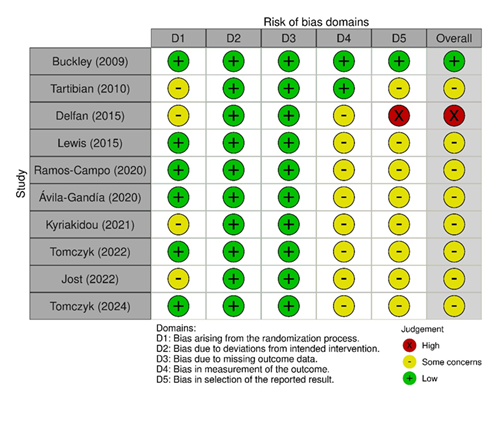
Figure 2: Risk of bias assessment of the included studies across five domains using the Cochrane Risk of Bias tool. The overall judgement for each study is shown in the final column.
Of the ten studies included, one study (Delfan, 2015) demonstrated a high overall risk of bias, primarily due to concerns in the selection of reported results and measurement domains. The remaining studies were judged to have “some concerns,” primarily due to issues related to the measurement of outcomes and potential selective reporting, while maintaining low risk in the randomization and missing data domains.
In addition to the RoB 2.0 assessment, the GRADE framework was applied to evaluate the certainty of evidence across studies. All included studies were rated as “Moderate” certainty, primarily due to serious imprecision from small sample sizes despite the absence of serious inconsistency or indirectness across studies. Potential publication bias was assessed as “undetected” or “some concerns” across studies, further contributing to the “Moderate” overall rating (Table 1).
|
Study (year) |
Risk of Bias |
Inconsistency |
Indirectness |
Imprecision |
Publication Bias |
Overall GRADE Rating |
|
Buckley (2009) |
Low |
Not serious |
Not serious |
Serious (small sample) |
Undetected |
Moderate |
|
Tartibian (2010) |
Some concerns |
Not serious |
Not serious |
Serious (small sample) |
High |
Moderate |
|
Delfan (2015) |
Some concerns |
Not serious |
Not serious |
Serious (small sample) |
Some concerns |
Moderate |
|
Lewis (2015) |
Some concerns |
Not serious |
Not serious |
Serious (small sample) |
Some concerns |
Moderate |
|
Ramos-Campo (2020) |
Some concerns |
Not serious |
Not serious |
Serious (small sample) |
Some concerns |
Moderate |
|
Ávila-Gandía (2020) |
Some concerns |
Not serious |
Not serious |
Serious (small sample) |
Some concerns |
Moderate |
|
Kyriakidou (2021) |
Some concerns |
Not serious |
Not serious |
Serious (small sample) |
Some concerns |
Moderate |
|
Tomczyk (2022) |
Some concerns |
Not serious |
Not serious |
Serious (small sample) |
Some concerns |
Moderate |
|
Jost (2022) |
Some concerns |
Not serious |
Not serious |
Serious (small sample) |
Some concerns |
Moderate |
|
Tomczyk (2024) |
Some concerns |
Not serious |
Not serious |
Serious (small sample) |
Some concerns |
Moderate |
Table 1. GRADE quality assessment summary for included studies.
This quality assessment indicates that while the included studies provide relevant evidence regarding omega-3 fatty acid supplementation in athletes, caution should be exercised in interpreting the findings due to limitations in reporting, outcome measurement, and sample sizes across studies.
Results
A total of 10 studies were included comprising of randomized controlled trials (RCTs). These studies involved a combined total of 256 athlete participants, with mean ages ranging from 18.6 to 36.0 years across different trials. The included studies investigated the impact of omega-3 supplementation on factors such as cardiovascular health, pulmonary variables, neuromuscular function, inflammation markers and exercise-induced muscle damage (EIMD) (Table 2).
|
N |
First Author (year) |
Study Type |
Pts |
Mean age (years) |
Supplementation |
Comments |
|
1 |
Buckley (2009) |
RCT double-blinded |
25 males |
N-3=21.7 ±1.0 |
1.560mg DHA & 360mg EPA per day (n=12) |
N-3 supplementation led to: |
|
SO=23.2±1.1 |
6.000mg SO (n=13) |
1. Reduction in: TRG, diastolic BP, and heart rate. |
||||
|
5 weeks |
2. Improvement in: Cardiovascular risk factors. |
|||||
|
3. No improvement in: Performance or recovery. |
||||||
|
2 |
Tartibian (2010) |
RCT |
40 males |
18.6±2.35 |
180mg EPA & 120mg DHA per day |
Consuming N-3 during 12 weeks training led to: |
|
4 weeks |
1. Significantly positive effect on pulmonary variables such as FEV1, FVC, VC, MVV, FEF 25–75, FIV1. |
|||||
|
2. No significant changes were observed in FEV1% and FIV1%. |
||||||
|
3 |
Delfan (2015) |
RCT double-blinded |
22 males |
N-3 group=23.6±1.9 |
2.400mg EPA & 1.200mg DHA per day (n=11) |
N-3 supplementation led to: |
|
Placebo=23.1±1 |
Placebo group (n=11) |
1. Reduced production of TNF-α and IL-1β, IL-10, IFN-γ. |
||||
|
4 weeks |
2. Increased production of IL-6. |
|||||
|
3. No change in IL-4 secretion |
||||||
|
4. A shift in the balance of Th cells towards the Th2 phenotype |
||||||
|
4 |
Lewis (2015) |
RCT double-blinded |
30 males |
N-3 group=23.7±4.9 |
375mg EPA & 510mg DHA (n=18) |
N-3 supplementation improved peripheral neuromuscular function and aspects of fatigue with an unclear effect on central neuromuscular function. |
|
Placebo=26.0±3.0 |
Placebo group (n=12) |
1. Plasma EPA was higher on N-3 than placebo. |
||||
|
3 weeks |
2. Increase in DPA and DHA were not significant. |
|||||
|
3. Unclear effect on MVC force (4.1 ± 6.6 %). |
||||||
|
4. Increased vastus lateralis EMG by 20 ± 18 % vs placebo. |
||||||
|
5. Reduced Wingate percent power drop by 4.76 ± 3.4 % vs placebo. |
||||||
|
6. Difference in TT performance was unclear (−1.9± 4.8 %). |
||||||
|
5 |
Ramos-Campo (2020) |
RCT double-blinded |
15 males |
36.0±8.1 |
2.100mg DHA per day & 240mg EPA per day (n=8) |
N-3 supplementation led to: |
|
Controlled Crossover Trial |
1. Lower concentrations of inflammation (IL1β and IL6) and muscle damage markers (CPK and LDH-5). |
|||||
|
Placebo group (n=7) |
2. Decreased muscle soreness but did not improve the knee flexors and extensor strength deficit after an eccentric training session in trained endurance athletes. |
|||||
|
10 weeks |
||||||
|
6 |
Ávila-Gandía (2020) |
RCT double-blinded |
38 males |
>18 years old |
975mg DHA |
DHA supplementation led to: |
|
4 weeks (30 days) |
1. Improved mean power output at ventilatory threshold 2 (VT2) both as absolute and relative values, |
|||||
|
2.145mg of EPA and 858mg DHA per day |
2. Higher oxygen consumption at VT2 both for absolute and relative values. |
|||||
|
3. Heart rate recovery rate improved during the recovery phase. |
||||||
|
7 |
Kyriakidou (2021) |
RCT |
14 males |
25.07 ± 4.05 |
4 weeks |
1. N-3 supplementation led to successful attenuation in minor aspects of Exercise-induced muscle damage but it did not improved performance |
|
2. These findings may have relevance to soreness-associated exercise avoidance |
||||||
|
8 |
Tomczyk (2022) |
RCT |
26 males |
37±3 |
2.234mg of EPA and 930mg of DHA per day (n=14) |
1. N-3 supplementation led to an increase in concentrations of PA, which is a metabolite of Trp with documented positive effects on brain functions, thus enhancing the adaptive response to endurance exercises. |
|
4.000mg of MCT per day (n=12) |
2. These data indicates that plasma PA and possibly other metabolites could be a marker of adaptive response to exercise when accompanied by N-3 supplementation. |
|||||
|
12 weeks |
||||||
|
9 |
Jost (2022) |
RCT |
26 males |
37±3 |
2.234mg of EPA and 916mg of DHA daily (n=14) |
OUE, OUEP, and OUE@VAT improved following endurance training. However, N-3 supplementation did not have an additional effect on these parameters. |
|
4.000mg of MCT per day (n=12) |
||||||
|
12 weeks |
||||||
|
10 |
Tomczyk (2024) |
RCT |
26 males |
37±3 |
2.234mg of EPA and 930mg of DHA per day (n=14) |
N-3 supplementation led to: |
|
4.000mg of MCT per day (n=12) |
1. Improvement of O3I and running economy. |
|||||
|
12 weeks |
2. Increased VO2 peak. |
|||||
|
3. No improvement in the 1500-m run trial time in amateur runners. |
Abbreviations: N-3: Omega-3, SO: Sunflower Oil, DHA: Docosahexaenoic Acid EPA: Eicosapentaenoic Acid, TRG: Triglycerides, BP: Blood Pressure, FEV1: Forced Expiratory Volume in One Second, FVC: Forced Vital Capacity, VC: Vital Capacity, MVV: Maximum Voluntary Ventilation, FEF 25–75: Forced Expiratory Flow at 25–75% of the Pulmonary Volume, FIV1: Forced Inspiratory Volume in One Second, TNF-α: Tumor Necrosis Factor Alpha, IL: Interleukin, IFN-γ: Interferon Gamma, Th Cells: T-helper Cells, MVC: Maximal Voluntary Contraction, CPK: Creatine Phosphokinase, LDH-5: Lactate Dehydrogenase Isoenzyme 5, VT2: Ventilatory Threshold 2, Trp: Tryptophan, MCT: Medium-Chain Triglyceride, OUE: Oxygen Uptake Efficiency, OUEP: Oxygen Uptake Efficiency Plateau, OUE@VAT: Oxygen Uptake Efficiency at the Ventilatory Anaerobic Threshold, O3I: Omega-3 Index, VO2 peak: Peak Oxygen Uptake
Table 2: Characteristics and Key Findings of RCTs Included in the Systematic Review on N-3 Supplementation and Athletic Performance.
Discussion
The present systematic review summarizes the existing evidence of various effects on physiology and metabolism of EPA and DHA supplementation in relation to exercise performance, muscle recovery, inflammation and neuromuscular adaptations. EPA and DHA appear to positively influence muscle metabolism whereas their impact on functional response to exercise, post-exercise recovery and performance remains inconclusive.
5.1 Performance and Muscle Adaptations
There is a considerable number of studies which has shown that EPA and DHA supplements are able to modulate muscle metabolism, potentially improving muscle recovery and reducing muscle soreness. This benefit is more pronounce on amateur than professional athletes possibly due to differences in metabolic flux or the longer duration of those studies in such populations. What needs to be addressed at this point is, that it does not necessarily translate into enhanced athletic performance, particularly among elite athletes [10].
Another interesting finding is that EPA and DHA could be particularly beneficial for preserving muscle mass and function in aging populations. This conclusion was drawn since muscle torque and quality improvements post-exercise were observed in studies in which older females were subjected to resistance training. However, improvements in dynamic and explosive strength did not necessarily lead to enhanced isometric strength performance. This aligns with previous studies indicating that while supplementation may optimize certain muscle adaptations, it does not universally enhance all aspects of muscle strength [10].
5.2 Inflammation and Recovery
According to the current literature, the most important mechanism of EPA and DHA that highlights their benefits on human health is their ability to modulate inflammation. This role enables them to affect muscle repair and recovery since it has been demonstrated from several studies that EPA and DHA supplementation leads to lower levels of inflammatory markers such as IL-1β, IL-6, and TNF-α particularly within the 24- to 48-hour post-exercise recovery period [12,14]. These findings are also reinforced by a decrease in markers of muscle damage such as creatine kinase (CK) and lactate dehydrogenase-5 (LDH-5), indicating that EPA and DHA supplements may lead to enhanced integrity and resilience of muscle fibers [14].
Despite the afore-mentioned benefits, the effects of EPA and DHA supplements on muscle strength recovery remain inconclusive. This arises from inconsistencies observed among studies regarding the supplementation protocol. As a consequence, there have been reported mixed results with regards to post-exercise strength deficits. In other words, EPA and DHA may improve subjective recovery markers such as pain perception but they do not necessarily restore muscle strength more rapidly than the placebo [12,14].
5.3 Pulmonary and Cardiovascular Effects
Before we discuss the effects of omega-3 fatty acids on cardiorespiratory function, it is wise to remind the terms running economy (RE) and oxygen consumption. RE is the steady-state oxygen consumption (VO2) at a given running velocity [19]. Maximal oxygen uptake (VO2max) is defined as the oxygen uptake attained during maximal exercise intensity that could not be increased despite further increases in exercise workload, thereby defining the limits of the cardiorespiratory system [20]. Until now, these parameters are unique and cannot be substituted from others such as OUEP and OUE@VAT (Jost-2022). As shown from Tomczyk et al. omega-3 fatty acid supplementation led to improved RE and VO2max. These improvements were more pronounce on endurance rather than short-term race performances [13]. Additionally, omega-3 supplementation led to enhanced pulmonary function (FEV1, FVC, VC, MVV, FEF25–75, and FIV1 but not in FEV1% and FIV1%) than training alone as evidenced by improvements in lung capacities. These suggest that omega-3 supplements may reduce airway inflammation and improve oxygen exchange [16].
With regards to cardiovascular health, EPA and DHA supplementation has also been associated with positive effects on it. This includes lower triglyceride levels and lower heart rates during submaximal exercise. Although these findings are linked to potential cardiovascular benefits, they do not translate into improved performance in endurance sports [17].
5.4 Neuromuscular Effects
Fatty acids, including omega-3, are an integral part of neurons, nerve endings, myelin and muscle membranes. These essential nutrients must be provided by the diet due to the inability of our bodies to synthesize them endogenously. This observation essentially gave the impetus to many researchers to study the role of EPA and DHA in neuromuscular adaptations. Until now, there is evidence that these supplements have the ability to alter the membrane composition and fluidity and thus nerve conduction and muscle contraction efficiency are enhanced. However, these studies indicate that these effects are more pronounced at the peripheral rather than central neuromuscular level [18].
5.5 Potential Mechanisms
The mechanisms by which omega-3 fatty acids supplements, especially EPA and DHA, exert their effects remain an area of active investigation. Taking into account all of the above (possible mechanisms of action of omega-3 fatty acids), it can be concluded that their benefits stem from their ability to reduce oxidative stress, modify the immune response and influence cell membrane dynamics. However, the exact pathways through which EPA and DHA interact with exercise metabolism require further elucidation [15,21].
Limitations
Existing studies on omega-3 fatty acid supplementation exhibit significant heterogeneity, limiting the ability to draw definitive conclusions. Variability in daily doses and differing EPA/DHA ratios complicate comparisons between studies, as does the use of divergent formulations, including variations in preparation methods and the presence of different EPA/DHA enantiomers. Moreover, inconsistencies in treatment duration and the timing of supplementation before outcome measurements introduce further variability. The diversity of study populations, ranging from elite athletes to amateurs and recreational participants, adds another layer of complexity, as does the wide range of exercise types studied, including cycling, swimming, and football. Additionally, differences in exercise programs—such as the focus on upper versus lower limbs or the inclusion of isometric versus eccentric exercises—further challenge the generalizability of the findings. This substantial heterogeneity across studies makes it difficult to establish standardized recommendations for omega-3 supplementation in sports performance and recovery.
Conclusion
In summary, omega-3 supplementation, especially EPA and DHA, appears to exert beneficial effects on a wide variety of physiological and metabolic pathways including muscle soreness, inflammation, neuromuscular, cardiovascular and pulmonary adaptations. The majority of those effects are evident mainly in amateur athletes. However, its impact on overall exercise performance and strength recovery remains inconclusive due to the existing inconsistencies among the studies. Future research should focus on optimizing supplementation protocols, identifying responders and non-responders and elucidating the precise molecular mechanisms underlying these effects.
Acknowledgments
None.
Conflict of interest
The authors have nothing to declare.
Financial disclosure
This study did not receive any specific grant from funding agencies in the public, commercial, or not-for-profit sectors.
References
- Del Re A, Alexandrov A. Chapter 100 - Epidemiology of sports injuries. In: Eltorai AEM, Bakal JA, DeFroda SF, Owens BD, editors. Translational Sports Medicine [Internet]. Academic Press (2023): 501-514.
- Prieto-González P, Martínez-Castillo JL, Fernández-Galván LM, et al. Epidemiology of Sports-Related Injuries and Associated Risk Factors in Adolescent Athletes: An Injury Surveillance. Int J Environ Res Public Health 18 (2021): 48-57.
- Aicale R, Tarantino D, Maffulli N. Overuse injuries in sport: a comprehensive overview. Journal of Orthopaedic Surgery and Research 13 (2018): 309.
- Bell DR, Post EG, Biese K, et al. Sport Specialization and Risk of Overuse Injuries: A Systematic Review With Meta-analysis. Pediatrics 142 (2018): e20180657.
- Aldanyowi SN, AlOraini LI. Personalizing Injury Management and Recovery: A Cross-Sectional Investigation of Musculoskeletal Injuries and Quality of Life in Athletes. ORR 16 (2024): 137-151.
- Bastholm R. Musculoskeletal injuries and the effects on quality of life and social and emotional well-being in an Australian Aboriginal population. HealthBulletin (2018).
- Patel DR, Yamasaki A, Brown K. Epidemiology of sports-related musculoskeletal injuries in young athletes in United States. Transl Pediatr 6 (2017): 160-166.
- Leppänen M, Aaltonen S, Parkkari J, et al. Interventions to Prevent Sports Related Injuries: A Systematic Review and Meta-Analysis of Randomised Controlled Trials. Sports Med 44 (2014): 473-486.
- Vitale K, Getzin A. Nutrition and Supplement Update for the Endurance Athlete: Review and Recommendations. Nutrients 11 (2019): 1289.
- Thielecke F, Blannin A. Omega-3 Fatty Acids for Sport Performance- Are They Equally Beneficial for Athletes and Amateurs? A Narrative Review. Nutrients 12 (2020): 3712.
- Ávila-Gandía V, Torregrosa-García A, Luque-Rubia AJ, et al. Re-esterified DHA improves ventilatory threshold 2 in competitive amateur cyclists. J Int Soc Sports Nutr 17 (2020): 51.
- Kyriakidou Y, Wood C, Ferrier C, et al. The effect of Omega-3 polyunsaturated fatty acid supplementation on exercise-induced muscle damage. J Int Soc Sports Nutr 18 (2021): 9.
- Tomczyk M, Jost Z, Chroboczek M, et al. Effects of 12 Wk of Omega-3 Fatty Acid Supplementation in Long-Distance Runners. Med Sci Sports Exerc 55 (2023): 216-224.
- Ramos-Campo DJ, Ávila-Gandía V, López-Román FJ, et al. Supplementation of Re-Esterified Docosahexaenoic and Eicosapentaenoic Acids Reduce Inflammatory and Muscle Damage Markers after Exercise in Endurance Athletes: A Randomized, Controlled Crossover Trial. Nutrients 12 (2020): 719.
- Delfan M, Ebrahim K, Baesi F, et al. The immunomodulatory effects of fish-oil supplementation in elite paddlers: A pilot randomized double blind placebo-controlled trial. Prostaglandins Leukot Essent Fatty Acids 99 (2015): 35-40.
- Tartibian B, Maleki BH, Abbasi A. The effects of omega-3 supplementation on pulmonary function of young wrestlers during intensive training. J Sci Med Sport 13 (2010): 281-286.
- Buckley JD, Burgess S, Murphy KJ, et al. DHA-rich fish oil lowers heart rate during submaximal exercise in elite Australian Rules footballers. J Sci Med Sport 12 (2009): 503-507.
- Lewis EJH, Radonic PW, Wolever TMS, et al. 21 days of mammalian omega-3 fatty acid supplementation improves aspects of neuromuscular function and performance in male athletes compared to olive oil placebo. J Int Soc Sports Nutr 12 (2015): 28.
- Barnes KR, Kilding AE. Running economy: measurement, norms, and determining factors. Sports Med Open 27 (2015) 1:8.
- Hawkins MN, Raven PB, Snell PG, et al. Maximal oxygen uptake as a parametric measure of cardiorespiratory capacity. Med Sci Sports Exerc 39 (2007): 103-107.
- Tomczyk M, Bidzan-Wiącek M, Kortas JA, et al. Omega-3 fatty acid supplementation affects tryptophan metabolism during a 12-week endurance training in amateur runners: a randomized controlled trial. Sci Rep 14 (2024): 4102.

 Impact Factor: * 3.8
 Acceptance Rate: 77.96%
  Time to first decision: 10.4 days
  Time from article received to acceptance: 2-3 weeks