Parotid Gland Enlargement: A Diagnostic Challenge
Shabana Shaik*, Bharati Patil, Lishika Jain
Department of Oral Medicine and Radiology, The Oxford Dental College Bangalore, India
*Corresponding Author: Shabana Shaik, Department of Oral Medicine and Radiology, The Oxford Dental College Bangalore, India
Received: 07 September 2025; Accepted: 24 September 2025; Published: 13 November 2025
Article Information
Citation: Shabana Shaik, Bharati Patil, Lishika Jain. Parotid Gland Enlargement: A Diagnostic Challenge. Archives of Clinical and Medical Case Reports. 9 (2025): 231-233.
View / Download Pdf Share at FacebookAbstract
Parotid swelling may develop secondary to infections or systemic disorders such as diabetes mellitus. This report describes a 51 year old man presenting with Recurrent Parotitis associated with inadequate glycaemic control. Diagnosis was established through clinical examination, imaging and laboratory investigations. Therapy consisted of broad spectrum antibiotics, supportive measures and improved blood sugar management, leading to a marked recovery. This case illustrates how systemic disease can influence salivary gland pathology and stresses the need for multidisciplinary care for long term success.
Keywords
<p>Parotid Gland; Parotid swelling; Therapy; Infections; Diabetes</p>
Article Details
1. Introduction
Parotid swelling can result from various causes, including infections, tumors, and systemic conditions. Infections like mumps, tumors such as pleomorphic adenomas, and diseases like diabetes or Sjögren’s syndrome are common contributors [1–5]. Diagnosis involves clinical examination, ultrasound (USG), Sialography to assess the swelling, and FNAC to identify whether it’s benign or malignant [6,7]. Treatment is based on the cause—ranging from controlling blood sugar to medication or surgery [5,7,8]. This case highlights one such presentation and its management.
2. Case Report
2.1 History
A 51-year-old male presented to the outpatient clinic of the Department of Oral Medicine with a chief complaint of increased mobility of both maxillary and mandibular teeth persisting for the past three months. He also reported a mildly painful swelling located below the left ear, which had been present for two days without any noticeable change in size. The swelling did not vary with meals and was not accompanied by a decrease in salivary flow. The patient's medical history was significant for type 2 diabetes mellitus, diagnosed 8 years ago and managed with oral hypoglycemic agents. He also reported a 20-year history of tobacco smoking, averaging 10 cigarettes per day. Additionally, the patient recalled experiencing a similar episode of facial swelling on the right side six years ago, for which he underwent surgical treatment. On further enquiry and review of previous medical records, he was found to have been diagnosed with Parotitis involving the right gland. Surgical drainage with antibiotic therapy had been carried out at the time, and FNAC reports had identified Klebsiella as the causative organism.
2.2 Physical Examination
On extraoral examination, the patient appeared moderately built and adequately nourished. A unilateral swelling was noted on the left side of the face, extending from the preauricular region inferior to the tragus, involving the angle of the mandible, and extending posteriorly into the postauricular area. On palpation, the swelling was firm in consistency, mildly tender, exhibited localized warmth, and measured approximately 5 × 4 cm. It was not adherent to underlying structures. The left submandibular lymph node was palpable, mobile, and soft in consistency, suggestive of reactive lymphadenopathy. A healed post-auricular surgical scar was observed on the right side, which the patient attributed to a similar swelling surgically treated six years prior. Intraoral examination revealed multiple missing teeth and generalized periodontal compromise in the remaining dentition. There were no signs of intraoral swelling, pus discharge, or active infection. The Stensen’s duct orifice appeared patent, and salivary flow was within normal limits. Capillary blood glucose measured at the time was 317 mg/dL, indicating significant hyperglycemia. Based on the clinical findings, a provisional diagnosis of Recurrent Parotitis was made. The patient was started on empirical therapy, which included a combination of Amoxicillin and Clavulanic acid, Metronidazole, and Vitamin C tablets. Additionally, hot fomentation was advised to aid symptom relief (Figures 1, 2).

Figure 1: Initial presentation of Swelling.
2.3 Investigations and Diagnosis
The patient was advised to undergo further testing, including an HbA1C test, which revealed a level of 9.5%. Additionally, an ultrasonography of the salivary glands was performed, showing the following results:
- • The left parotid gland was enlarged with an altered echo-pattern. Few sub-centimetric reactive intra and peri-parotid lymphnodes noted. These findings were suggestive of Acute Parotitis.
- • The right parotid gland, which had undergone surgery previously, showed signs of atrophy and an altered echo-pattern suggestive of Chronic Parotitis.
- • The submandibular glands appeared normal.
- • Based on the clinical findings, the patient’s history, and the results from the investigations, a final diagnosis of Recurrent Parotitis attributed to Diabetes mellitus was made.
2.4 Management and Follow-Up
The patient was referred to the physician, who adjusted his hypoglycemic medications. The patient was advised to continue the prescribed antibiotics for 7 days. Upon follow-up, significant improvement was noted in the patient's condition. The patient is regularly followed up and there are no recurrences.
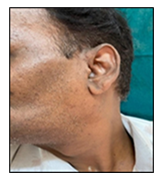
Figure 2: Swelling after one week follow up.
3. Discussion
Parotid gland enlargement may arise from a variety of causes, broadly classified into non-inflammatory and infectious origins. Among the non-inflammatory conditions, Sialadenosis is a key consideration, typically presenting as a bilateral, painless, and symmetrical swelling of the parotid glands. It is frequently associated with systemic disorders such as Diabetes mellitus, chronic malnutrition, alcoholism, and endocrine disturbances [1–4]. Unlike infections, Sialadenosis lacks signs of inflammation like pain, erythema, or purulent discharge and is managed by correcting the underlying systemic imbalance [4]. In contrast, acute bacterial Parotitis, commonly due to Staphylococcus aureus, presents more dramatically with unilateral painful swelling, skin erythema over the gland, fever, and often pus draining from Stensen’s duct [5]. Prompt differentiation between these conditions is critical to ensure proper treatment. In patients with Diabetes, chronic hyperglycemia alters the oral environment in ways that increase the risk for salivary gland infections. Changes such as mucosal thinning, reduced blood supply, delayed healing, and diminished salivary flow (xerostomia) weaken local immune defenses [1,2]. These alterations create favorable conditions for bacterial colonization, especially when salivary stasis is present, predisposing to Parotitis and recurrent infections. Evaluation of parotid swelling involves a combination of imaging and cytological assessments. Ultrasound remains the first-line modality due to its ability to detect ductal dilation, sialoliths, abscess formation, and parenchymal changes associated with inflammation or obstruction [6]. Fine needle aspiration cytology (FNAC) plays a vital role in distinguishing between inflammatory, infectious, and neoplastic processes, often guiding subsequent treatment [7,8]. In complex cases, Sialography, MRI or CT imaging may be warranted for deep tissue assessment. Microbiological testing confirms bacterial involvement and guides the selection of antimicrobial therapy.
Treatment of acute suppurative Parotitis includes supportive measures like adequate hydration, warm compresses, use of sialagogues, and early empirical antibiotic therapy. Antibiotics should provide broad coverage against both aerobic and anaerobic bacteria, including MRSA (Methicillin resistant Staphylococcus aureus). Agents such as Oxacillin, Cefazolin, or Vancomycin are commonly used, while broader-spectrum agents like Clindamycin or Amoxicillin-Clavulanate are effective against β-lactamase-producing organisms [9,10]. If an abscess is suspected, surgical drainage may be necessary. Once culture and sensitivity results are obtained, antibiotic therapy should be refined. In patients with diabetes, optimal glycemic control is vital, as poorly managed blood sugar levels impair immune function and delay recovery. Diabetic individuals often require longer treatment durations and broader antimicrobial coverage. A multidisciplinary approach involving dental specialists, physicians, and endocrinologists is essential to ensure effective treatment, prevent recurrence, and support long-term glandular health.
4. Conclusion
This case highlights the importance of considering underlying systemic conditions such as Diabetes mellitus in the diagnosis and management of recurrent Parotitis. Timely medical intervention, including appropriate antibiotic therapy and adjustments to diabetic control, contributed to the patient's recovery. Regular follow-up is crucial to ensure the patient's continued improvement and to manage any potential recurrences effectively.
References
- Negrato CA, Tarzia O. Buccal alterations in diabetes mellitus. Diabetology & metabolic syndrome 2 (2010): 1-1.
- Aitken-Saavedra J, Rojas-Alcayaga G, Maturana-Ramírez A, et al. Salivary gland dysfunction markers in type 2 diabetes mellitus patients. J Clin Exp Dent 7 (2015): e501.
- Ok SM, Ho D, Lynd T, et al. Candida infection associated with salivary gland—A narrative review. Journal of Clinical Medicine 10 (2020): 97.
- Mandel L, Surattanont F. Bilateral parotid swelling: a review. Oral Surg Oral Med Oral Pathol Oral Radiol Endod 93 (2002): 221-237.
- Brook I. Diagnosis and management of parotitis. Arch Otolaryngol Head Neck Surg 118 (1992): 469-471.
- Koch M, Sievert M, Iro H, et al. Ultrasound in inflammatory and obstructive salivary gland diseases: own experiences and a review of the literature. J Clin Med 10 (2021): 35-47.
- Saibaba Mahalakshmi SM, Srinivas Kandula SK, Patil Shilpa PS, et al. Chronic recurrent non-specific parotitis: a case report and review 27 (2017): 95-100.
- Jain R, Gupta R, Kudesia M, et al. Fine needle aspiration cytology in diagnosis of salivary gland lesions: A study with histologic comparison. Cytojournal 10 (2013).
- Wilson M, Pandey S. Parotitis (2023).
- Brook I. Diagnosis and management of parotitis. Archives of Otolaryngology–Head & Neck Surgery 118 (1992): 469-471.

 Impact Factor: * 5.3
 Acceptance Rate: 75.63%
  Time to first decision: 10.4 days
  Time from article received to acceptance: 2-3 weeks